Does Plank Width Matter?
How Flooring Width Changes the Look of a Room

How Flooring Width Changes the Look of a Room
When choosing new flooring, homeowners often focus on color, material, and finish—but plank width can have just as much impact on how a room looks and feels.
Whether you choose narrow planks, a more standard width, or a wide-plank style, the size of each board affects visual movement, scale, and even how large or open a room appears.
There is no single “best” plank width. The right choice depends on the size of the room, the style of the home, the flooring material, and the overall look you want to create.
Here’s how plank width can change the feel of a space.
Plank-width terminology can vary by manufacturer, but flooring generally falls into three broad categories.
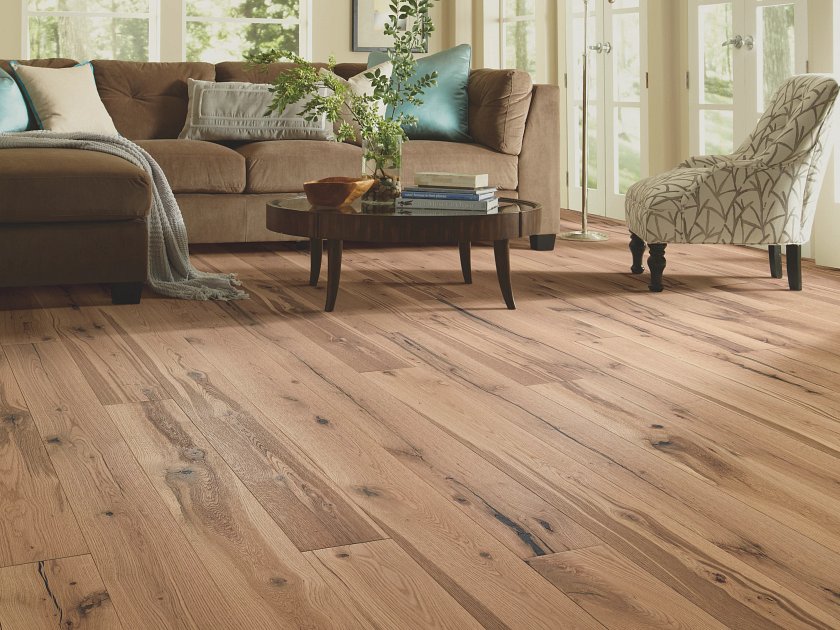
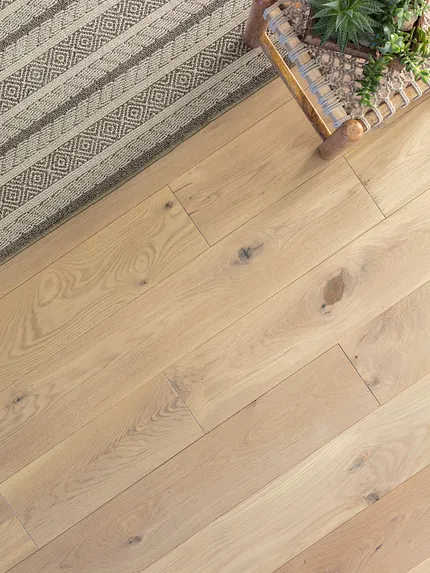
Narrow plank flooring typically features slimmer boards and more visible seams across the floor.
Standard-width planks offer a balanced, versatile look that works well in many different types of homes.
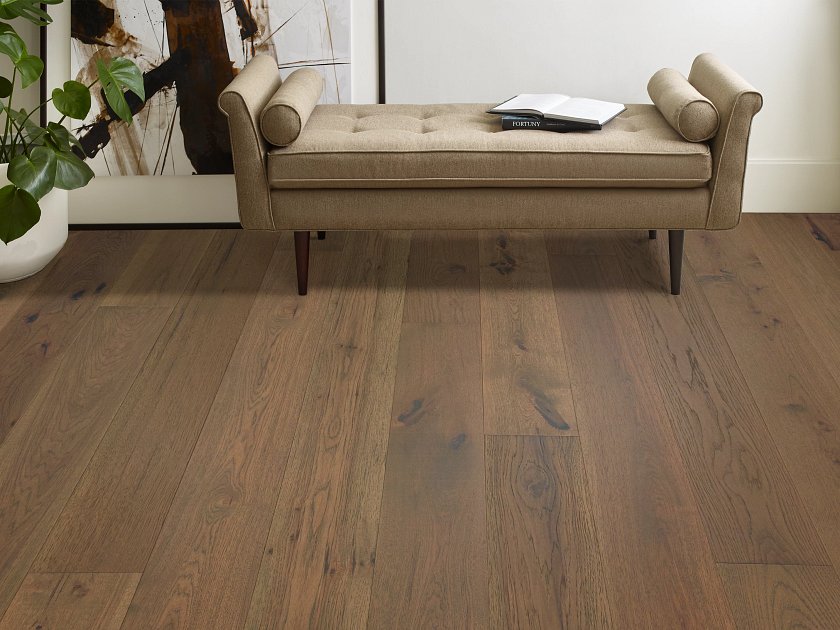
Wide-plank flooring uses broader boards, which means fewer seams and larger expanses of visible wood grain or pattern.
The exact dimensions matter less than the overall effect. Even a small change in plank width can noticeably change the rhythm and scale of a room.
Narrow planks create more lines across the floor because more individual boards are needed to cover the same area.
That added repetition creates visual movement.
In traditional homes, narrow hardwood planks can feel classic and timeless. They are often associated with older homes and historic flooring styles, especially when paired with natural wood tones and traditional finishes.
Because there are more seams, narrow planks can also make a floor feel busier.
In a small room, that additional pattern may add character, but too much visual movement can sometimes make a space feel more compact.
Narrow planks can be a good choice when you want:
Standard-width planks tend to offer the most balanced appearance.
They have enough width to show off the grain and character of the flooring without becoming a dominant design feature. At the same time, they create less visual activity than narrow boards.
This makes them especially versatile.
Standard-width flooring can work in traditional, transitional, farmhouse, and contemporary interiors depending on the color, finish, and texture you select.
If you like the look of wood flooring but do not want plank width to become a major focal point, a standard width is often a comfortable choice.
It can also work well when flooring flows through several different rooms because the proportions tend to feel appropriate across a variety of spaces.
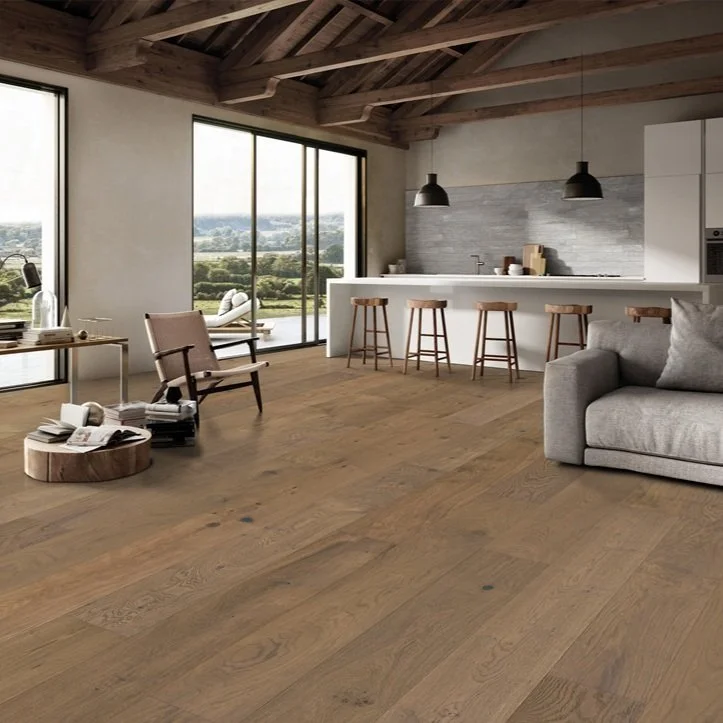
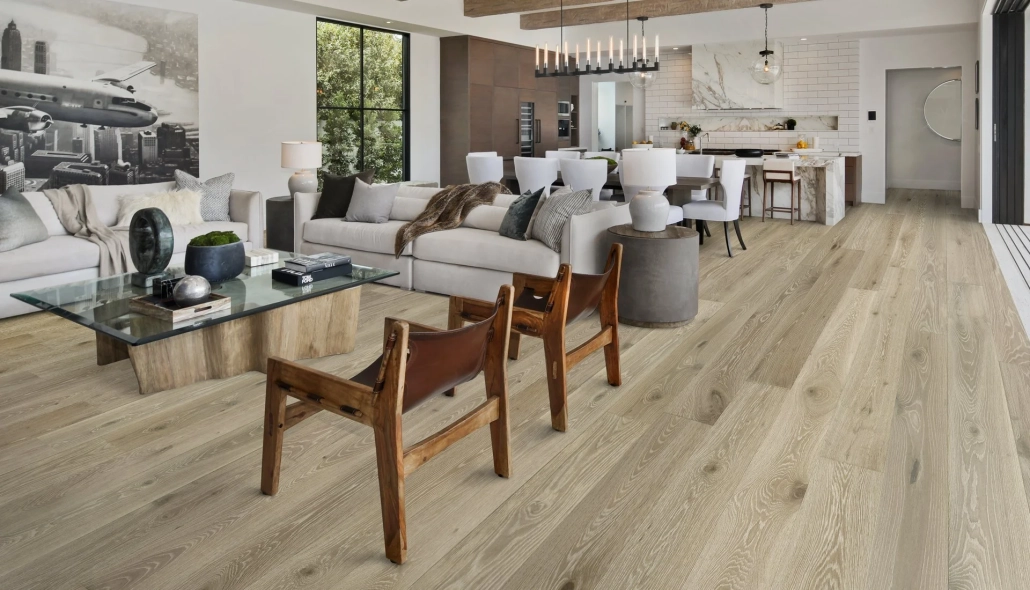
Wide-plank flooring has become popular for its clean, expansive appearance.
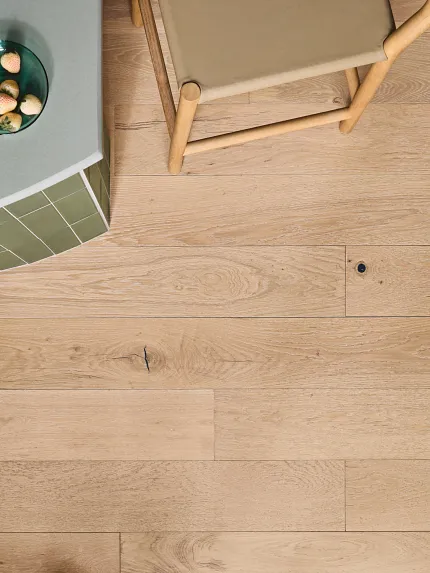
Because fewer boards are needed to cover the floor, there are fewer seams and less visual interruption. This allows more attention to fall on the grain, texture, and color of each plank.
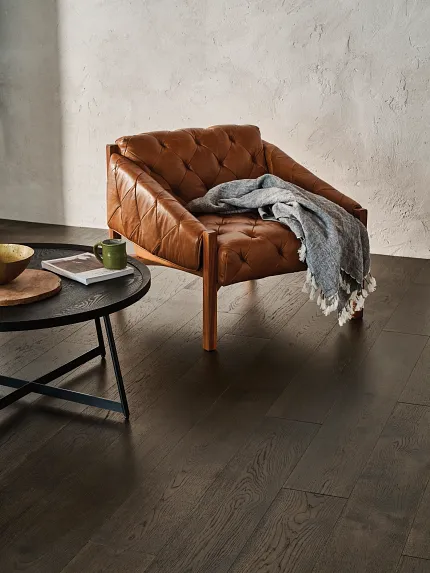
Wide planks can make a room feel calmer and more open, particularly when paired with lighter or natural flooring tones.
They are frequently used in modern, Scandinavian, rustic, and updated traditional interiors.
Wide planks can be especially effective in:
However, the scale of the room still matters.
An extremely wide plank in a very small room may feel oversized, while a very narrow plank in a large open space can sometimes create more visual activity than desired.
The goal is proportion.
It can influence the perception of size, although plank width is only one part of the equation.
Wide planks create fewer lines across the floor, which can make the surface appear less busy and more continuous. That often helps a room feel more spacious.
Lighter colors and consistent flooring from room to room can strengthen that effect.
Narrow planks create more visual lines, which can make the floor itself more noticeable. In the right design, this adds richness and character. In another space, it may make the room feel more visually divided.
Plank direction also plays a role.
Running flooring along the longest dimension of a room can help emphasize length, while continuous flooring through adjoining spaces can make the overall footprint feel more connected.
Width, color, direction, and room layout all work together.
One of the easiest ways to evaluate plank width is to think about proportion.
Large rooms can usually handle wider planks comfortably because the flooring is viewed across a larger area.
In smaller rooms, standard or moderately wide boards may feel more balanced.
That does not mean you cannot use wide flooring in a small space. In fact, fewer seams can sometimes make a small room feel cleaner and less cluttered.
The important thing is to see the flooring in context rather than judging a single sample by itself.
A 7-inch plank may look very wide when you are holding one board in your hand but feel completely different once several planks are installed across a room.
Plank width can also help reinforce the design style you want.
For example:
Traditional: Narrower to standard-width boards often complement classic architecture and traditional furnishings.
Modern: Wider planks with clean surfaces and minimal variation can create a simple, streamlined look.
Rustic: Wide boards with visible knots, character, and texture can highlight the natural qualities of wood.
Transitional: Standard or moderately wide planks can bridge traditional and contemporary elements.
Scandinavian or Organic Modern: Light-colored, wider planks often work especially well because they create an airy, natural appearance.
These are not strict rules. The color, finish, species, and surrounding finishes can completely change how a particular plank width feels.
Yes.
Plank width is an important design consideration for engineered hardwood, luxury vinyl plank, and laminate as well.
Luxury vinyl and laminate products often recreate the look of wood, so their plank dimensions contribute significantly to how realistic and proportional the finished floor appears.
Some products also feature varied plank lengths or widths to create a more customized look.
When comparing flooring, pay attention to both the dimensions of the individual plank and how the pattern repeats across the floor.
When choosing real hardwood, plank width is not only a design decision.
Wood naturally expands and contracts as moisture and humidity levels change. Wider boards can show seasonal movement differently than narrower boards.
That is especially important in Minnesota, where indoor humidity may fluctuate significantly between summer and winter.
Product construction, wood species, installation method, acclimation, and indoor humidity control all play a role in hardwood performance.
Engineered hardwood is often available in wider plank formats because its layered construction can provide greater dimensional stability than traditional solid hardwood.
If you love a wide-plank look, talk with your flooring professional about the specific product and installation environment rather than choosing based on appearance alone.
One of the biggest challenges when selecting flooring is imagining what one sample will look like across hundreds of square feet.
A flooring sample is useful for evaluating color and texture, but it does not always communicate scale.
Whenever possible, look at larger displays or several planks together.
Also consider the other visual elements in the room:
All of these can affect how the flooring reads once it is installed.
The answer depends on what you want the flooring to do visually.
Choose narrower planks when you want more movement, detail, and traditional character.
Choose a standard width when you want a versatile look that works comfortably across different rooms and styles.
Choose wider planks when you want fewer seams, more visible grain, and a cleaner, more expansive appearance.
Ultimately, plank width should feel proportional to both your home and your design style.
At House2Home Flooring & Design Studio, we can help you compare different plank widths, colors, textures, and flooring materials side by side so you can see how each option will affect the overall look of your space.
Stop by our Ham Lake showroom to explore hardwood, engineered hardwood, luxury vinyl, and laminate options and find the right scale for your home.
H2H — From Inspiration to Installation.
 https://house2homeflooring.com/wp-content/uploads/2026/11/checker-Feature.png
323
453
Candy Weisenberger
https://house2homeflooring.com/wp-content/uploads/2019/04/House2Home-Logo-Color.png
Candy Weisenberger2026-11-03 12:09:582026-10-12 20:31:25Checkerboard Tile Is Back: A Timeless Pattern with a Modern Twist
 https://house2homeflooring.com/wp-content/uploads/2026/10/motor-Feature.png
323
453
Candy Weisenberger
https://house2homeflooring.com/wp-content/uploads/2019/04/House2Home-Logo-Color.png
Candy Weisenberger2026-10-27 12:42:172026-09-29 17:26:00Motorized Window Shades: Are They Worth It?
 https://house2homeflooring.com/wp-content/uploads/2026/09/Privacy-Feature.png
323
453
Candy Weisenberger
https://house2homeflooring.com/wp-content/uploads/2019/04/House2Home-Logo-Color.png
Candy Weisenberger2026-10-13 15:53:392026-09-29 16:39:35How to Choose Window Treatments for Privacy Without Losing Natural Light

Tues: 8am – 7pm
Mon • Wed • Thurs • Fri: 8am – 6pm
Saturday: 10am – 4pm
Sunday: Closed


 What Is Carpet Padding—and How Much Does It Really Matter?