How to Choose Window Treatments
for Privacy Without Losing Natural Light

for Privacy Without Losing Natural Light
Natural light can completely change the way a home feels. It makes rooms feel brighter, more open and more inviting—and it can bring out the colors and textures in your flooring, furnishings and other finishes.
The problem? The windows that bring all that beautiful light into your home can also leave you feeling exposed.
This is especially common in bedrooms, bathrooms, street-facing living rooms and homes where neighboring properties are close by. Closing the blinds or shades solves the privacy problem, but traditional window coverings can also leave a room feeling dark.
Fortunately, privacy and natural light don’t have to be an either-or decision.
Today’s window treatments offer many ways to control what people can see from outside while still allowing daylight into your home. The key is choosing the right style, fabric and opacity for the room.
Before choosing a window treatment, think about what “privacy” means for that particular room.
A bathroom may need a much higher level of privacy than a second-floor home office. A living room facing a busy street may need daytime privacy without being completely closed off from the outdoors. A bedroom may need both privacy and room darkening at different times of day.
Ask yourself:
The answers can point you toward very different window-treatment solutions.
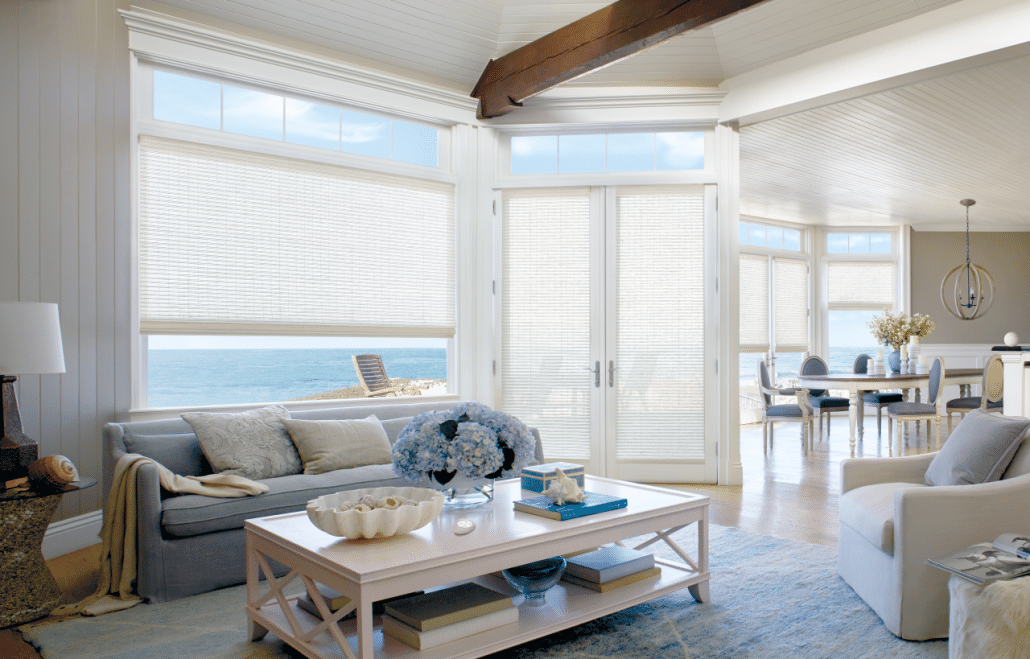
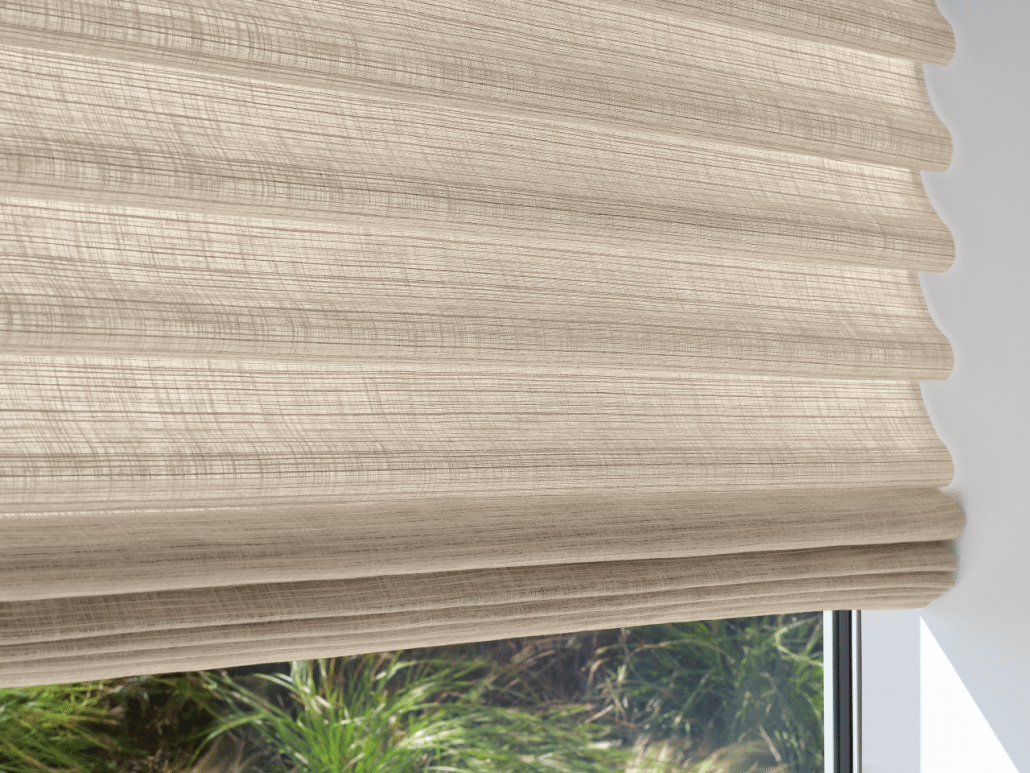
Light-filtering shades are one of the most straightforward ways to balance natural light and privacy.
Rather than completely blocking sunlight, the fabric diffuses it as it enters the room. This can reduce the harshness of direct sunlight while creating a softer, more comfortable glow.
Depending on the fabric and opacity, light-filtering shades can also obscure the view into the home during daylight hours.
They’re particularly appealing in spaces such as:
There are many fabric choices available, so “light filtering” doesn’t describe one single level of privacy. Some fabrics are relatively sheer, while others provide considerably more coverage.
That’s why seeing and handling fabric samples can be helpful before making a decision.
One of the smartest solutions for maintaining both privacy and daylight is a top-down, bottom-up shade.
Instead of only raising from the bottom, this style can also lower from the top.
Imagine a street-facing living room window. You may want to cover the lower half so people walking past can’t see directly inside, while leaving the upper portion open to the sky.
A top-down, bottom-up shade lets you do exactly that.
This configuration can work especially well for:
It allows you to customize privacy rather than simply choosing between completely open and completely closed.
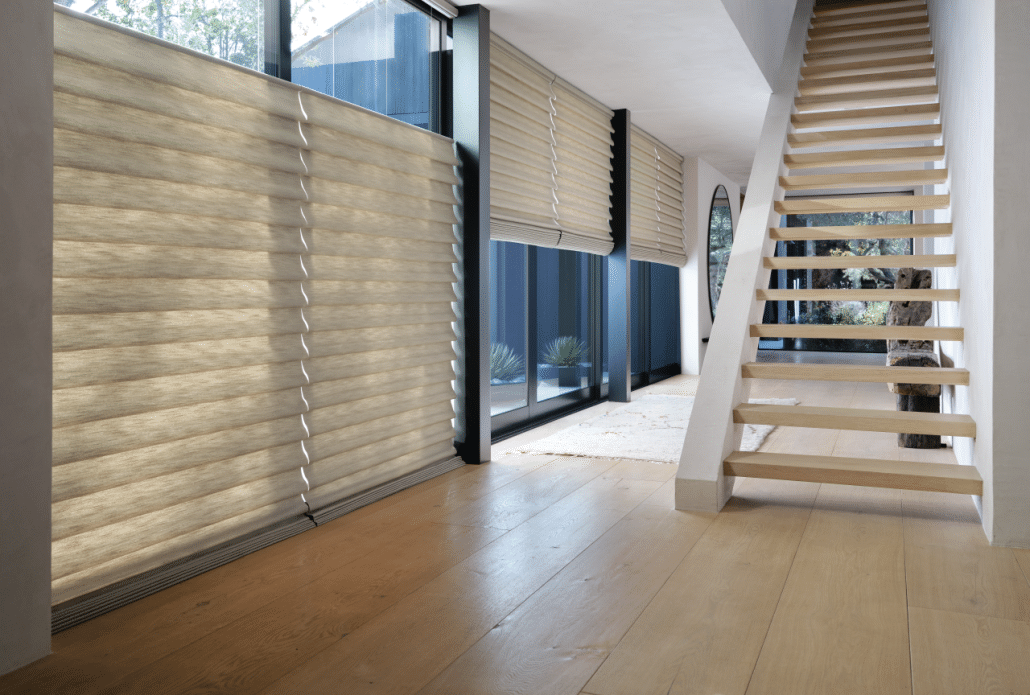
Cellular shades—sometimes called honeycomb shades—are another versatile option.
Their distinctive cellular construction creates pockets within the shade. Depending on the fabric selected, they can provide anything from softly filtered light to greater room darkening.
Cellular shades are popular because they offer a clean appearance without adding a lot of visual bulk around the window.
They can also provide an additional insulating layer at the window, which is worth considering in Minnesota’s climate.
For homeowners who want privacy, light control and a streamlined look, cellular shades can be a strong option.
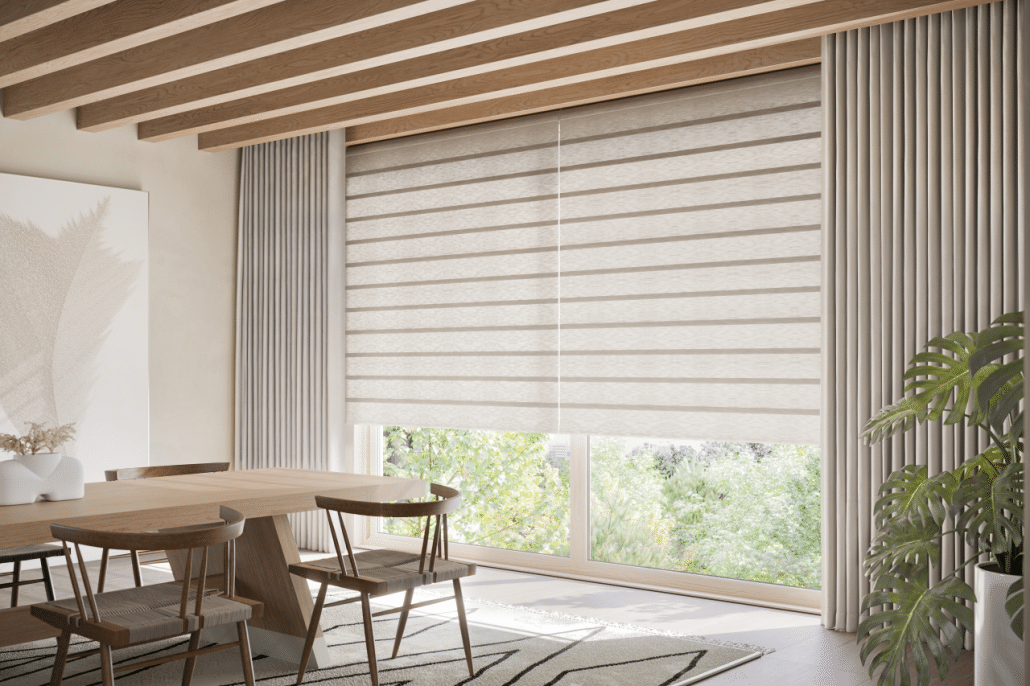
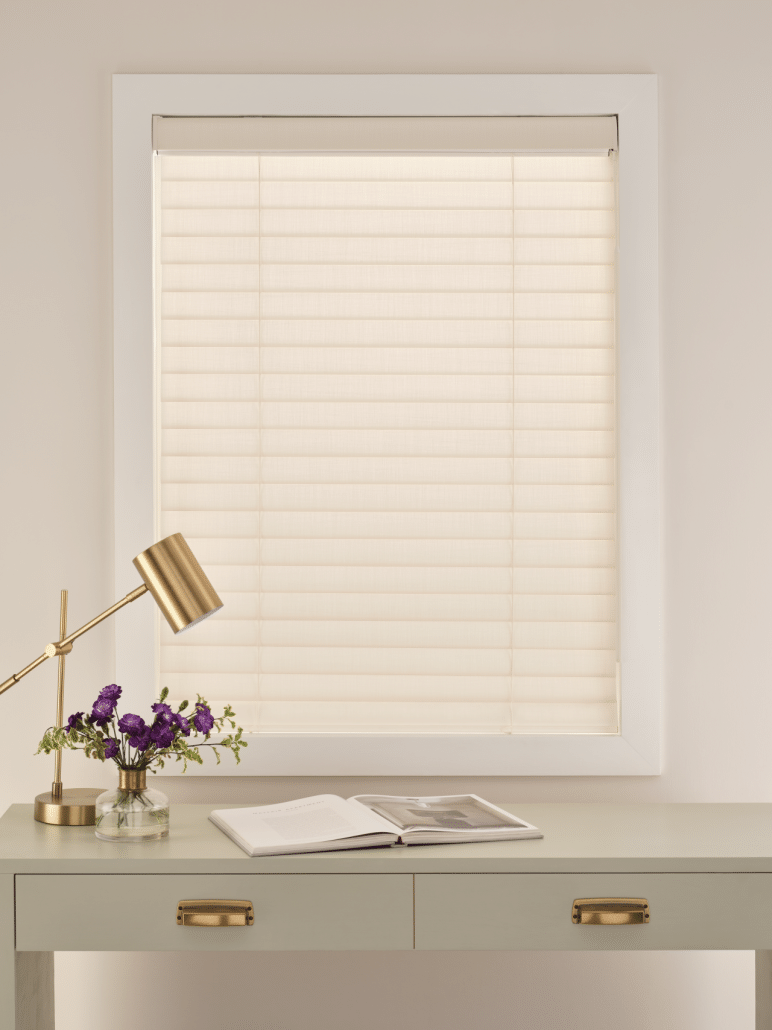
Sheer shades offer another approach to balancing daylight and privacy.
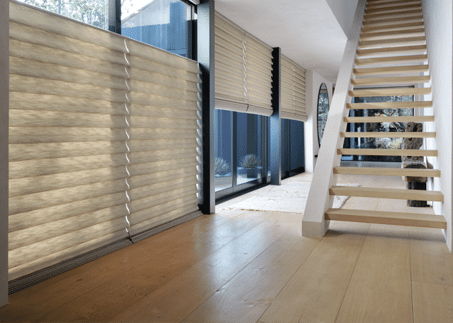
These treatments typically combine sheer fabric with adjustable fabric vanes. When the vanes are open, softened daylight can enter through the sheer material. When they’re adjusted, you gain greater privacy and light control.
The effect is softer than traditional blinds and can work beautifully in living rooms, dining rooms and other spaces where you want the window treatment to contribute to the overall design.
However, it’s important to understand that sheer doesn’t necessarily mean private—especially after dark.
We’ll come back to that.
Blinds remain popular because adjustable slats give homeowners considerable control over both light and sightlines.
Instead of simply opening or closing the entire window covering, you can tilt the slats to redirect light and reduce direct views into the room.
This can be useful when you want natural light but don’t necessarily need a completely unobstructed view.
The angle of the slats can make a surprising difference in how much privacy you have while still allowing daylight into the space.
Blinds can also work well in combination with drapery or other decorative treatments when you want to add softness to the room.
This is one of the most important things to understand when choosing privacy window treatments.
A treatment that provides privacy during the day may not provide the same privacy at night.
During daylight hours, the exterior of your home is generally brighter than the interior, which can make it difficult to see through certain light-filtering or sheer materials.
At night, that relationship reverses.
When the lights are on inside and it’s dark outside, some sheer and light-filtering fabrics can allow significantly more visibility into the room.
If nighttime privacy matters, make sure your window treatment provides adequate coverage after dark—or consider layering treatments so you can adjust them as needed.
Sometimes one window treatment doesn’t have to do everything.
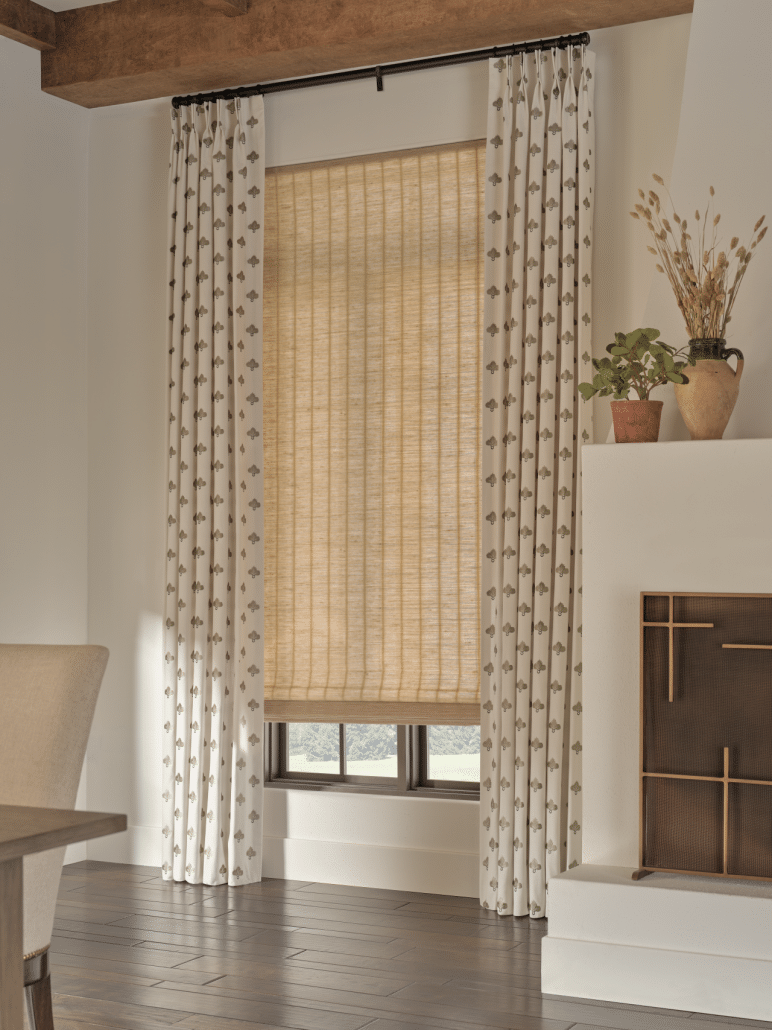
Layering treatments can give you greater control over light, privacy and design.
For example, you might combine:
A light-filtering shade with drapery.
Use the shade during the day to diffuse light, then close the drapery when you want additional privacy.
Blinds with decorative panels.
The blinds provide adjustable light control while fabric panels soften the overall appearance.
A sheer treatment with a secondary privacy layer.
Enjoy filtered daylight when privacy requirements are lower and use the second treatment when greater coverage is needed.
Layering can also make windows feel more finished and intentional as part of the room’s overall design.
Not every window receives the same kind of sunlight.
South- and west-facing windows may receive stronger direct sunlight, while north-facing windows typically receive softer, more indirect light.
A window that receives intense afternoon sun may need more than privacy. You may also want to consider glare, heat and UV exposure.
In another room, maximizing every bit of available natural light might be the priority.
This is why choosing one identical window treatment for every window in the house isn’t always the best solution.
You can maintain a cohesive look while selecting fabrics or operating styles that make sense for individual rooms.
A common mistake is assuming that greater privacy automatically requires heavier, darker window coverings.
In reality, the right fabric and operating style can provide privacy while keeping a room feeling bright.
Light-colored treatments can reflect daylight and create an airy appearance. Light-filtering fabrics can diffuse harsh sunlight rather than eliminating it. Top-down options can block direct sightlines while leaving part of the window completely open.
The goal is to control the light—not necessarily eliminate it.
Window treatments shouldn’t be selected in isolation.
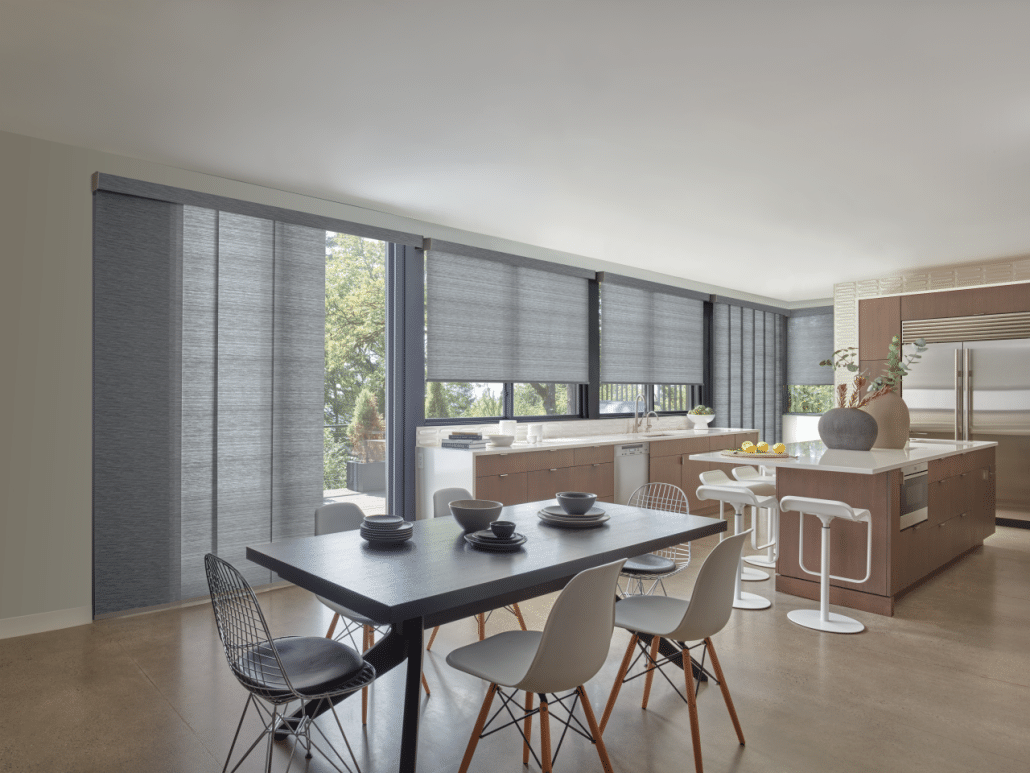
They sit alongside your wall color, flooring, furniture, cabinetry, countertops, rugs and other finishes. Because windows naturally draw attention, the treatment you choose can have a noticeable impact on the room’s overall appearance.
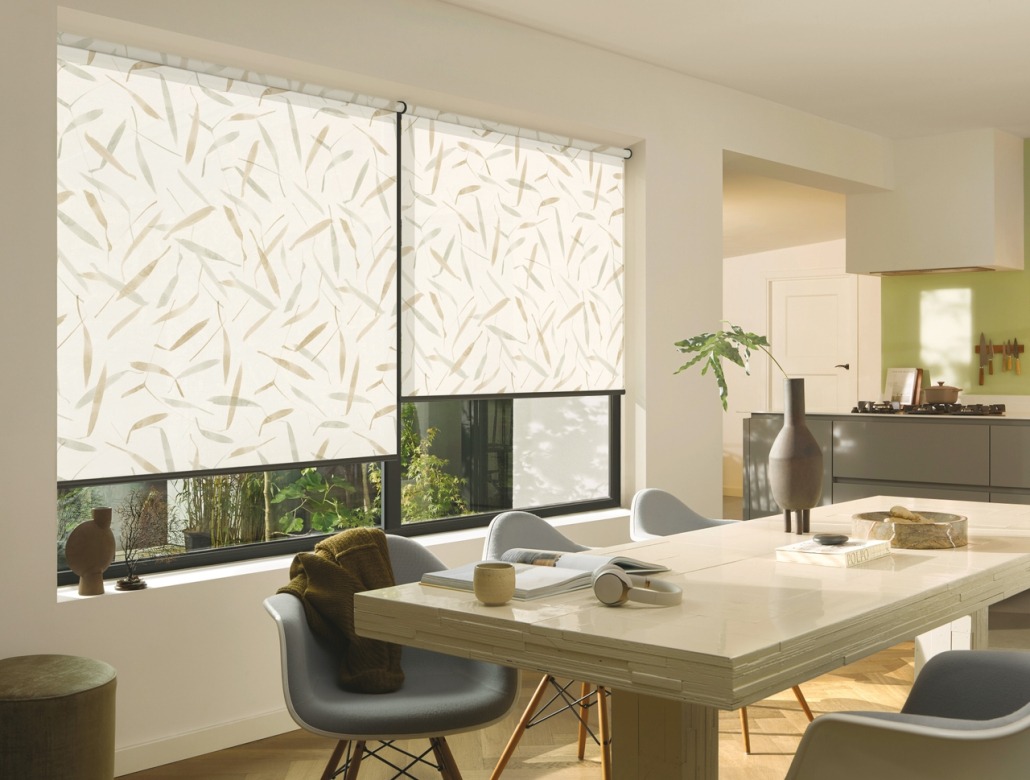
A soft woven texture can warm up a room with hard flooring and smooth surfaces. A clean roller or cellular shade can complement a more streamlined interior. Drapery can introduce softness, color or pattern.
The best window treatment should solve your privacy and light-control needs while still looking like it belongs in the room.
Bathrooms present a unique challenge because privacy is usually a top priority, but natural light can make the space feel significantly more inviting.
The right solution depends on the location and size of the window as well as the amount of moisture in the space.
A top-down treatment may allow daylight through the upper portion of a window while covering direct sightlines. Other privacy-focused treatments can diffuse light while obscuring the view.
Product suitability matters in rooms with elevated moisture, so make sure the material and treatment you’re considering are appropriate for the environment.
Bedroom window treatments often need to perform several jobs.
During the day, you may want plenty of natural light with some privacy. At night, you may want much greater privacy and a darker sleeping environment.
That’s where adjustable or layered window treatments can be particularly useful.
Rather than compromising with a treatment that’s too dark during the day or not private enough at night, you can create a solution that changes with your needs.
Fabric opacity, texture and color can be difficult to judge on a screen.
A material described as “light filtering” may provide a very different level of privacy than you’re imagining. Colors also change depending on natural light, artificial light and the other finishes in the room.
Seeing samples in person makes it easier to compare:
It’s also helpful to look at window-treatment samples alongside flooring, paint, cabinetry and other finishes when you’re coordinating an entire room.
You shouldn’t have to choose between enjoying natural light and feeling comfortable in your own home.
The right window treatment can give you both.
At House2Home Flooring & Design Studio, we can help you explore window treatments based on how your windows actually function, the amount of privacy you need, the direction of the light and the overall design of your room.
Whether you’re looking for light-filtering shades, cellular shades, blinds, layered treatments or another solution, we’ll help you compare options and find the right balance of privacy, natural light and style.
Visit our Ham Lake showroom or talk with our design team about window treatments for your home.
H2H – from inspiration to installation.
 https://house2homeflooring.com/wp-content/uploads/2026/11/checker-Feature.png
323
453
Candy Weisenberger
https://house2homeflooring.com/wp-content/uploads/2019/04/House2Home-Logo-Color.png
Candy Weisenberger2026-11-03 12:09:582026-10-12 20:31:25Checkerboard Tile Is Back: A Timeless Pattern with a Modern Twist
 https://house2homeflooring.com/wp-content/uploads/2026/10/motor-Feature.png
323
453
Candy Weisenberger
https://house2homeflooring.com/wp-content/uploads/2019/04/House2Home-Logo-Color.png
Candy Weisenberger2026-10-27 12:42:172026-09-29 17:26:00Motorized Window Shades: Are They Worth It?
 https://house2homeflooring.com/wp-content/uploads/2026/09/Privacy-Feature.png
323
453
Candy Weisenberger
https://house2homeflooring.com/wp-content/uploads/2019/04/House2Home-Logo-Color.png
Candy Weisenberger2026-10-13 15:53:392026-09-29 16:39:35How to Choose Window Treatments for Privacy Without Losing Natural Light

Tues: 8am – 7pm
Mon • Wed • Thurs • Fri: 8am – 6pm
Saturday: 10am – 4pm
Sunday: Closed


 Motorized Window Shades: Are They Worth It?